Compare commits
| Author | SHA1 | Date | |
|---|---|---|---|
 ndeet |
457455edf0 | ||
|
ndeet
|
c3d32a04ce | ||
 Sato DRI |
2a470afc5d | ||
|
ndeet
|
cab44f0847 | ||
|
SatoDri
|
303bfce067 | ||
|
SatoDri
|
023e4060c5 | ||
|
SatoDri
|
9f3f702c9f | ||
|
ndeet
|
94eab634ca | ||
|
ndeet
|
225d4c33c5 | ||
|
ndeet
|
b935000fda | ||
|
ndeet
|
dec467e55b | ||
|
ndeet
|
a6b435d7e2 | ||
|
ndeet
|
706860e35f | ||
|
ndeet
|
25b06ab911 | ||
|
ndeet
|
7994834151 | ||
|
ndeet
|
6042284704 | ||
|
ndeet
|
848b1f5e30 | ||
|
ndeet
|
d3f8e2a60c | ||
|
ndeet
|
43920ce700 | ||
|
ndeet
|
7cb3ee2400 | ||
|
ndeet
|
8cb6afd918 | ||
|
ndeet
|
86cf5af6fa | ||
|
ndeet
|
0742b68e48 | ||
|
ndeet
|
0aa893767d | ||
|
ndeet
|
6a22f82a73 | ||
|
ndeet
|
17cb4f7814 | ||
|
ndeet
|
c469a3b4c1 | ||
|
ndeet
|
cfbee77a5b |
No files matched your search
@@ -0,0 +1,12 @@
|
|||||||
|
# BTCPay Server payment gateway for Odoo 16, 17, 18 and 19
|
||||||
|
|
||||||
|
## Accept bitcoin payments on Odoo 16, 17, 18 and 19
|
||||||
|
This odoo addon allows you to accept bitcoin and Lightning Network (and other cryptocurrency) payments in your Odoo e-commerce store.
|
||||||
|
|
||||||
|
|
||||||
|
## How to install
|
||||||
|
|
||||||
|
Please find the installation instructions here:
|
||||||
|
- [Odoo 18 + 19 documentation](https://github.com/btcpayserver/odoo/blob/19.0/payment_btcpayserver/README.md)
|
||||||
|
- [Odoo 17 documentation](https://github.com/btcpayserver/odoo/blob/17.0/payment_btcpayserver/README.md)
|
||||||
|
- [Odoo 16 documentation](https://github.com/btcpayserver/odoo/blob/16.0/payment_btcpayserver/README.md)
|
||||||
@@ -1,12 +1,20 @@
|
|||||||
# BTCPay Server payment gateway for Odoo 16
|
# BTCPay Server payment gateway for Odoo 18 / 19
|
||||||
|
|
||||||
## This is the module to connect Odoo 16 and BTCPay Server
|
## This is the module to connect Odoo 18 / 19 and BTCPay Server
|
||||||
This module allows you to accept bitcoin (and other cryptocurrency) payments in your Odoo e-commerce store.
|
This module allows you to accept bitcoin (and other cryptocurrency) payments in your Odoo e-commerce store.
|
||||||

|
|
||||||
|
|
||||||
|
:::tip
|
||||||
|
If you use Odoo 16 you can find the documentation [here](https://github.com/btcpayserver/odoo/blob/16.0/payment_btcpayserver/README.md) and for Odoo 17 [here](https://github.com/btcpayserver/odoo/blob/17.0/payment_btcpayserver/README.md).
|
||||||
|
:::
|
||||||
|
|
||||||
|
:::tip
|
||||||
|
The following instructions work for Odoo 18 and 19. You just need to make sure to download the matching branch release or use the matching branch (18.0 or 19.0) mentioned in the steps below.
|
||||||
|
:::
|
||||||
|
|
||||||
## Install the module
|
## Install the module
|
||||||
* Clone our [repository](https://github.com/btcpayserver/odoo) or download the .zip from the [releases page](https://github.com/btcpayserver/odoo/releases)
|
* Clone our [repository](https://github.com/btcpayserver/odoo) or download the .zip from the [releases page](https://github.com/btcpayserver/odoo/releases)
|
||||||
* Make sure you are on branch `16.0` or downloaded a release tagged with version v16.x
|
* Make sure you are on branch `19.0` (or `18.0`) or downloaded a [release](https://github.com/btcpayserver/odoo/releases) tagged with version v19.x (or v18.x)
|
||||||
* Place the `payment_btcpayserver` directory in your Odoo addons directory
|
* Place the `payment_btcpayserver` directory in your Odoo addons directory
|
||||||
* Install dependencies by running `pip install -r requirements.txt` (from inside the `payment_btcpayserver` directory)
|
* Install dependencies by running `pip install -r requirements.txt` (from inside the `payment_btcpayserver` directory)
|
||||||
* Restart Odoo
|
* Restart Odoo
|
||||||
@@ -21,28 +29,35 @@ This module allows you to accept bitcoin (and other cryptocurrency) payments in
|
|||||||
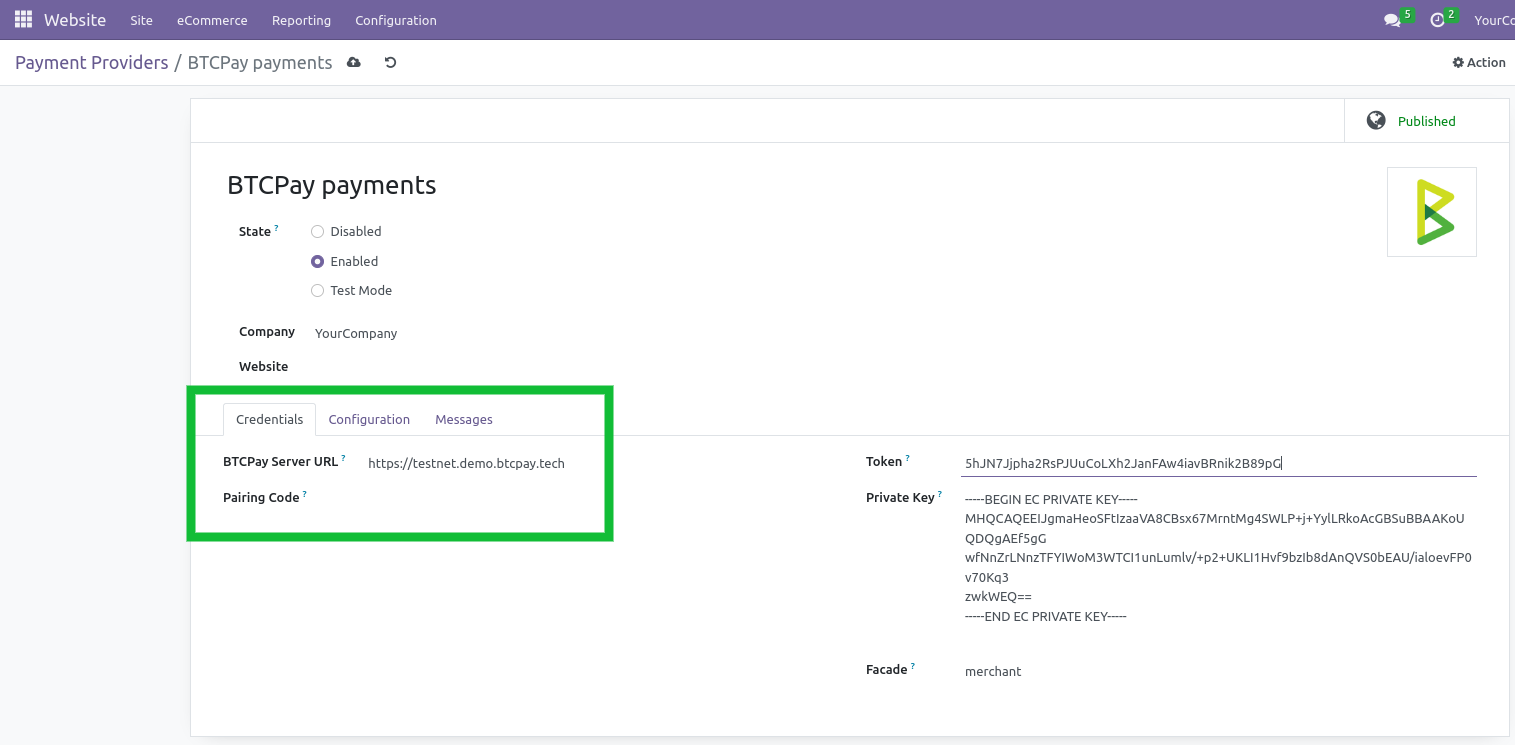
In the BTCPay settings form, tab "Credentials":
|
In the BTCPay settings form, tab "Credentials":
|
||||||
* Set field "State" to enabled
|
* Set field "State" to enabled
|
||||||
* Set field "BTCPay Server URL" as test or live URL including https://. Example URL: https://testnet.demo.btcpayserver.org
|
* Set field "BTCPay Server URL" as test or live URL including https://. Example URL: https://testnet.demo.btcpayserver.org
|
||||||
* Get a pairing code from your BTCPay Server store: Settings -> Access Tokens
|
* Get a pairing code from your BTCPay Server store:
|
||||||
|
* Go to: Settings -> Access Tokens
|
||||||
* Click on "Create Token" button
|
* Click on "Create Token" button
|
||||||
* Label: enter e.g. "My odoo store"
|
* Label: enter e.g. "My odoo store"
|
||||||
* Public Key: leave empty
|
* Public Key: leave empty
|
||||||
* Click on "Request Pairing" button, on next page click "Approve" button
|
* Click on "Request Pairing" button, on next page click "Approve" button
|
||||||
* At the top copy the code next to "Server initiated pairing code", e.g. "hg7z8wN"
|
* At the top copy the code next to "Server initiated pairing code", e.g. "hg7z8wN"
|
||||||
* Back in Odoo, paste the code into "Pairing Code" field
|
* Back in Odoo: paste the code into "Pairing Code" field
|
||||||
* Hit Tab key on your keyboard (or click on another field) and the pairing process will start automatically
|
* Hit Tab key on your keyboard (or click on another field) and the pairing process will start automatically
|
||||||
* When the pairing is successful the "Token" and "Private Key" field will be filled automatically
|
* When the pairing is successful the "Token" and "Private Key" field will be filled automatically (see screenshot below)
|
||||||
* Field Facade, keep default 'merchant'.
|
* Field Facade, keep default 'merchant'.
|
||||||
|
|
||||||
On the tab "Configuration":
|
On the tab "Configuration":
|
||||||
* Set field "Payment Journal" to "Bank", you can click the dropdown and click on the suggestion "Bank"
|
* Make sure field "Payment Journal" is set to "Bank", otherwise you can click the dropdown and click on the suggestion "Bank"
|
||||||
* Now you can **save** the settings
|
* Now you can **save** the settings
|
||||||
|
|
||||||

|
Check the payment method is enabled:
|
||||||
|
* Go to **Website** -> **Configuration** -> **Payment Methods**
|
||||||
|
* Make sure "Pay with Bitcoin / Lightning Network" is active
|
||||||
|
|
||||||
|
Congrats, all done. Do some testing to be sure all works.
|
||||||
|
|
||||||
|
|
||||||
|
|
||||||
## How does the payment page look?
|
## How does the payment page look?
|
||||||
|
|
||||||
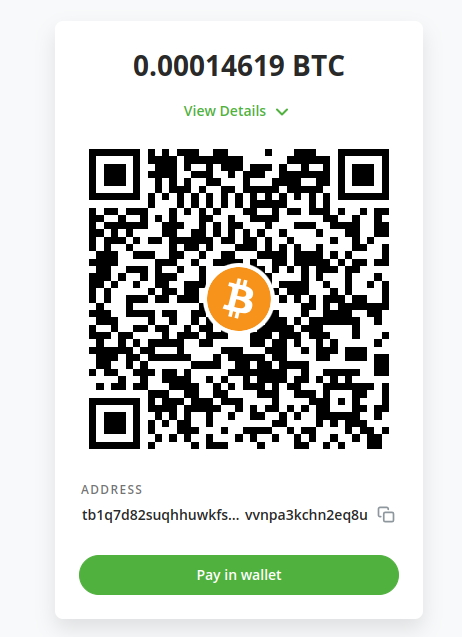
During the checkout the customers will have the option to select the payment method "Pay with Bitcoin / Lightning Network". After selecting they will be redirected to the BTCPay checkout page as shown below.
|
During the checkout the customers will have the option to select the payment method "Pay with Bitcoin / Lightning Network". After selecting they will be redirected to the BTCPay checkout page as shown below.
|
||||||
|
|
||||||

|
|
||||||
|
|
||||||
|
|
||||||
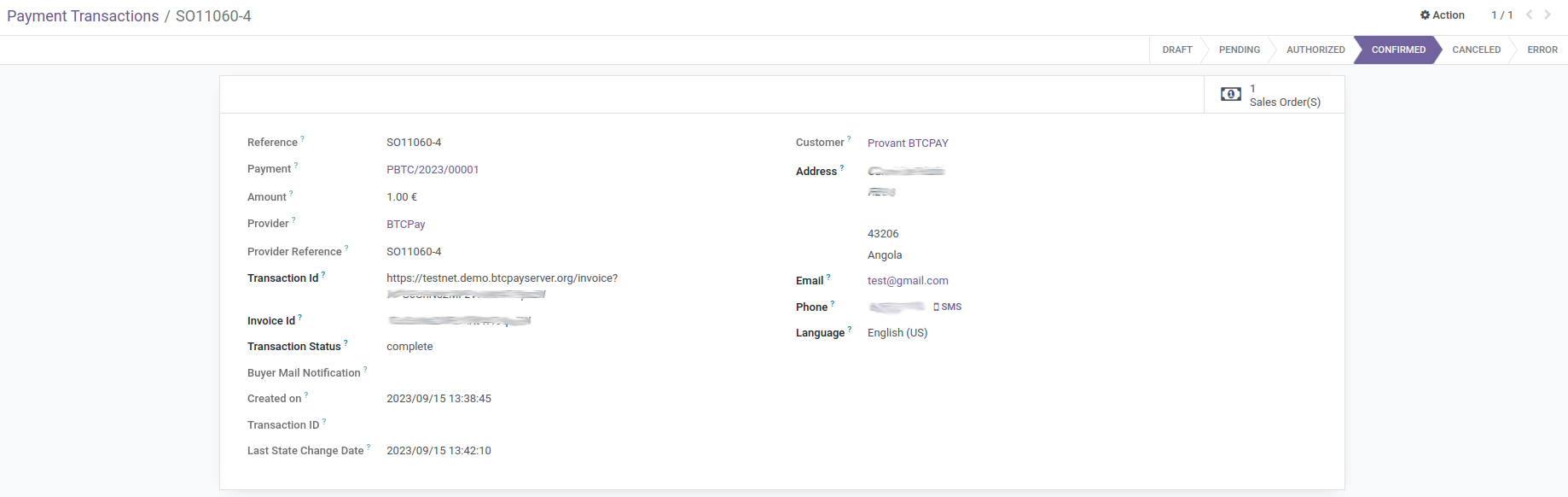
## Transaction BTCPay Details
|
## Transaction BTCPay Details
|
||||||
@@ -51,7 +66,7 @@ In transaction object, you will find more technical information about this metho
|
|||||||
* Invoice Id: the id of the invoice for which you want to fetch an event token
|
* Invoice Id: the id of the invoice for which you want to fetch an event token
|
||||||
* Transaction Status: That indicates state of transaction
|
* Transaction Status: That indicates state of transaction
|
||||||
|
|
||||||

|
|
||||||
|
|
||||||
## Troubleshooting
|
## Troubleshooting
|
||||||
### The order and transaction status does not get updated to "paid"
|
### The order and transaction status does not get updated to "paid"
|
||||||
|
|||||||
@@ -6,9 +6,9 @@ from . import models
|
|||||||
from odoo.addons.payment import setup_provider, reset_payment_provider
|
from odoo.addons.payment import setup_provider, reset_payment_provider
|
||||||
|
|
||||||
|
|
||||||
def post_init_hook(cr, registry):
|
def post_init_hook(env):
|
||||||
setup_provider(cr, registry, 'btcpayserver')
|
setup_provider(env, 'btcpayserver')
|
||||||
|
|
||||||
|
|
||||||
def uninstall_hook(cr, registry):
|
def uninstall_hook(env):
|
||||||
reset_payment_provider(cr, registry, 'btcpayserver')
|
reset_payment_provider(env, 'btcpayserver')
|
||||||
@@ -1,7 +1,7 @@
|
|||||||
#******************************************************************************
|
#******************************************************************************
|
||||||
# PAYMENT BTCPAY SERVER FOR ODOO
|
# PAYMENT BTCPAY SERVER FOR ODOO
|
||||||
#
|
#
|
||||||
# Copyright (C) 2023 Susanna Fort <susannafm@gmail.com>, ndeet
|
# Copyright (C) 2024 Susanna Fort <susannafm@gmail.com>, ndeet
|
||||||
#
|
#
|
||||||
#******************************************************************************
|
#******************************************************************************
|
||||||
#
|
#
|
||||||
@@ -21,11 +21,11 @@
|
|||||||
|
|
||||||
{
|
{
|
||||||
'name': 'Payment Provider: BTCPay Server',
|
'name': 'Payment Provider: BTCPay Server',
|
||||||
'summary': 'This module integrates BTCPAY - pay with Bitcoin - with Odoo v16.0',
|
'summary': 'This module integrates BTCPAY - pay with Bitcoin - with Odoo v19.0',
|
||||||
'author': 'BTCPay Server team and contributors',
|
'author': 'BTCPay Server team and contributors',
|
||||||
'website': 'https://github.com/btcpayserver/odoo',
|
'website': 'https://github.com/btcpayserver/odoo',
|
||||||
'category': 'Accounting/Payment Providers',
|
'category': 'Accounting/Payment Providers',
|
||||||
'version': '16.0.2.0',
|
'version': '19.0.1.1',
|
||||||
'license': 'GPL-3',
|
'license': 'GPL-3',
|
||||||
'currency': 'USD',
|
'currency': 'USD',
|
||||||
'application': False,
|
'application': False,
|
||||||
@@ -38,9 +38,11 @@
|
|||||||
'views/payment_transaction_views.xml',
|
'views/payment_transaction_views.xml',
|
||||||
'data/payment_provider_data.xml',
|
'data/payment_provider_data.xml',
|
||||||
],
|
],
|
||||||
'images': ['static/description/BTCPay-Odoo-16-featured.png'],
|
'images': ['static/description/BTCPay-Odoo-17-featured.png'],
|
||||||
|
# The BTCPay client (legacy BitPay API) is vendored in models/libs and
|
||||||
|
# only requires 'ecdsa' (plus 'requests', shipped with Odoo).
|
||||||
'external_dependencies': {
|
'external_dependencies': {
|
||||||
'python': ['btcpay-python']
|
'python': ['ecdsa']
|
||||||
},
|
},
|
||||||
'post_init_hook': 'post_init_hook',
|
'post_init_hook': 'post_init_hook',
|
||||||
'uninstall_hook': 'uninstall_hook',
|
'uninstall_hook': 'uninstall_hook',
|
||||||
|
|||||||
@@ -19,24 +19,19 @@
|
|||||||
#
|
#
|
||||||
# ******************************************************************************
|
# ******************************************************************************
|
||||||
|
|
||||||
import logging
|
import json
|
||||||
import pprint
|
|
||||||
|
|
||||||
import requests
|
|
||||||
import werkzeug
|
|
||||||
from werkzeug import urls
|
from werkzeug import urls
|
||||||
from werkzeug.exceptions import Forbidden
|
|
||||||
|
|
||||||
from odoo import _, http, SUPERUSER_ID
|
from odoo import _, http
|
||||||
from odoo.exceptions import ValidationError
|
from odoo.exceptions import ValidationError
|
||||||
from odoo.http import request
|
from odoo.http import request
|
||||||
from odoo.tools import html_escape
|
|
||||||
|
|
||||||
import json
|
from odoo.addons.payment.logging import get_payment_logger
|
||||||
from ..models.libs.client import BTCPayClient
|
from ..models.libs.client import BTCPayClient
|
||||||
|
|
||||||
|
|
||||||
_logger = logging.getLogger(__name__)
|
_logger = get_payment_logger(__name__)
|
||||||
|
|
||||||
|
|
||||||
class BTCPayController(http.Controller):
|
class BTCPayController(http.Controller):
|
||||||
@@ -44,69 +39,271 @@ class BTCPayController(http.Controller):
|
|||||||
_notify_url = '/payment/btcpay/ipn'
|
_notify_url = '/payment/btcpay/ipn'
|
||||||
_return_url = '/payment/btcpay/return'
|
_return_url = '/payment/btcpay/return'
|
||||||
|
|
||||||
@http.route(_checkout_url, type='http', auth='public', csrf=False, website=True)
|
@staticmethod
|
||||||
|
def _btcpay_client(provider):
|
||||||
|
return BTCPayClient(
|
||||||
|
host=provider.btcpay_location,
|
||||||
|
pem=provider.btcpay_privateKey,
|
||||||
|
tokens={provider.btcpay_facade: provider.btcpay_token},
|
||||||
|
)
|
||||||
|
|
||||||
|
@staticmethod
|
||||||
|
def _find_transaction(reference):
|
||||||
|
return request.env['payment.transaction'].sudo().search([
|
||||||
|
('reference', '=', reference),
|
||||||
|
('provider_code', '=', 'btcpayserver'),
|
||||||
|
], limit=1)
|
||||||
|
|
||||||
|
@staticmethod
|
||||||
|
def _lock_transaction(tx_sudo):
|
||||||
|
"""Lock a transaction until the current database transaction ends.
|
||||||
|
|
||||||
|
Checkout and IPN requests can arrive concurrently. Serializing them on
|
||||||
|
the payment transaction prevents two checkout requests from creating
|
||||||
|
separate invoices and makes an IPN re-check the invoice ID after a
|
||||||
|
checkout replaces an expired invoice.
|
||||||
|
"""
|
||||||
|
tx_sudo.ensure_one()
|
||||||
|
tx_sudo.flush_recordset()
|
||||||
|
tx_sudo.env.cr.execute(
|
||||||
|
"SELECT id FROM payment_transaction WHERE id = %s FOR UPDATE",
|
||||||
|
[tx_sudo.id],
|
||||||
|
)
|
||||||
|
tx_sudo.invalidate_recordset([
|
||||||
|
'state', 'btcpay_invoiceId', 'provider_reference',
|
||||||
|
])
|
||||||
|
|
||||||
|
@staticmethod
|
||||||
|
def _ensure_invoice_id_is_unique(tx_sudo, invoice_id):
|
||||||
|
"""Reject an invoice ID already linked to another transaction."""
|
||||||
|
other_tx = tx_sudo.env['payment.transaction'].sudo().search([
|
||||||
|
('id', '!=', tx_sudo.id),
|
||||||
|
('provider_code', '=', 'btcpayserver'),
|
||||||
|
'|',
|
||||||
|
('btcpay_invoiceId', '=', invoice_id),
|
||||||
|
('provider_reference', '=', invoice_id),
|
||||||
|
], limit=1)
|
||||||
|
if other_tx:
|
||||||
|
raise ValidationError(_(
|
||||||
|
"BTCPay: The invoice is already linked to another transaction."
|
||||||
|
))
|
||||||
|
|
||||||
|
@classmethod
|
||||||
|
def _validate_invoice_binding(
|
||||||
|
cls, tx_sudo, incoming_invoice_id, incoming_order_id, fetched_invoice):
|
||||||
|
"""Bind the untrusted IPN payload to one authenticated invoice and transaction."""
|
||||||
|
if not isinstance(fetched_invoice, dict):
|
||||||
|
raise ValidationError(_("BTCPay: Received an invalid invoice response."))
|
||||||
|
|
||||||
|
fetched_invoice_id = fetched_invoice.get('id')
|
||||||
|
fetched_order_id = fetched_invoice.get('orderId')
|
||||||
|
if not (
|
||||||
|
incoming_invoice_id
|
||||||
|
and incoming_invoice_id == fetched_invoice_id
|
||||||
|
and incoming_invoice_id == tx_sudo.btcpay_invoiceId
|
||||||
|
and incoming_invoice_id == tx_sudo.provider_reference
|
||||||
|
):
|
||||||
|
raise ValidationError(_(
|
||||||
|
"BTCPay: The notification invoice does not match the transaction."
|
||||||
|
))
|
||||||
|
if not (
|
||||||
|
incoming_order_id
|
||||||
|
and incoming_order_id == fetched_order_id
|
||||||
|
and incoming_order_id == tx_sudo.reference
|
||||||
|
):
|
||||||
|
raise ValidationError(_(
|
||||||
|
"BTCPay: The notification order does not match the transaction."
|
||||||
|
))
|
||||||
|
cls._ensure_invoice_id_is_unique(tx_sudo, incoming_invoice_id)
|
||||||
|
|
||||||
|
@classmethod
|
||||||
|
def _find_transaction_by_invoice_id(cls, invoice_id):
|
||||||
|
"""Find exactly one BTCPay transaction from its stored invoice ID."""
|
||||||
|
if not isinstance(invoice_id, str) or not invoice_id:
|
||||||
|
raise ValidationError(_("BTCPay: Missing invoice ID in notification data."))
|
||||||
|
|
||||||
|
txs_sudo = request.env['payment.transaction'].sudo().search([
|
||||||
|
('provider_code', '=', 'btcpayserver'),
|
||||||
|
('btcpay_invoiceId', '=', invoice_id),
|
||||||
|
], limit=2)
|
||||||
|
if len(txs_sudo) != 1:
|
||||||
|
raise ValidationError(_(
|
||||||
|
"BTCPay: No unique transaction found matching the invoice ID."
|
||||||
|
))
|
||||||
|
return txs_sudo
|
||||||
|
|
||||||
|
@staticmethod
|
||||||
|
def _validate_invoice_amount(tx_sudo, invoice):
|
||||||
|
"""Reject reuse of an invoice with a different amount or currency."""
|
||||||
|
try:
|
||||||
|
amount = float(invoice.get('price'))
|
||||||
|
except (AttributeError, TypeError, ValueError):
|
||||||
|
amount = None
|
||||||
|
if (
|
||||||
|
amount is None
|
||||||
|
or invoice.get('currency') != tx_sudo.currency_id.name
|
||||||
|
or tx_sudo.currency_id.compare_amounts(amount, tx_sudo.amount) != 0
|
||||||
|
):
|
||||||
|
raise ValidationError(_(
|
||||||
|
"BTCPay: The existing invoice amount or currency does not match the transaction."
|
||||||
|
))
|
||||||
|
|
||||||
|
@classmethod
|
||||||
|
def _validate_existing_invoice(cls, tx_sudo, invoice_id, invoice):
|
||||||
|
"""Validate a stored invoice before redirecting the customer to it."""
|
||||||
|
cls._validate_invoice_binding(
|
||||||
|
tx_sudo, invoice_id, tx_sudo.reference, invoice,
|
||||||
|
)
|
||||||
|
if not isinstance(invoice.get('status'), str) or not invoice['status']:
|
||||||
|
raise ValidationError(_("BTCPay: The existing invoice response is incomplete."))
|
||||||
|
|
||||||
|
@classmethod
|
||||||
|
def _validate_created_invoice(cls, tx_sudo, invoice):
|
||||||
|
"""Validate a newly created invoice before storing its identity."""
|
||||||
|
if not isinstance(invoice, dict):
|
||||||
|
raise ValidationError(_("BTCPay: Received an invalid invoice response."))
|
||||||
|
invoice_id = invoice.get('id')
|
||||||
|
if (
|
||||||
|
not isinstance(invoice_id, str)
|
||||||
|
or not invoice_id
|
||||||
|
or not isinstance(invoice.get('url'), str)
|
||||||
|
or not invoice['url']
|
||||||
|
or invoice.get('orderId') not in (None, tx_sudo.reference)
|
||||||
|
):
|
||||||
|
raise ValidationError(_("BTCPay: The created invoice response is incomplete."))
|
||||||
|
cls._ensure_invoice_id_is_unique(tx_sudo, invoice_id)
|
||||||
|
|
||||||
|
@http.route(_checkout_url, type='http', auth='public', methods=['POST'],
|
||||||
|
csrf=False, website=True)
|
||||||
def checkout(self, **data):
|
def checkout(self, **data):
|
||||||
|
""" Create the BTCPay invoice and redirect the buyer to it.
|
||||||
|
|
||||||
|
The redirect form only carries the transaction reference. The invoice
|
||||||
|
price, currency and buyer details are read from the transaction
|
||||||
|
server-side and are never taken from the (client-controlled) request
|
||||||
|
data, so a buyer cannot have an invoice created for a tampered amount.
|
||||||
|
"""
|
||||||
|
_logger.info("BTCPay: checkout request for transaction %s", data.get('reference'))
|
||||||
|
reference = data.get('reference')
|
||||||
|
tx_sudo = self._find_transaction(reference)
|
||||||
|
if not tx_sudo:
|
||||||
|
raise ValidationError(
|
||||||
|
_("BTCPay: No transaction found matching reference %s.", reference))
|
||||||
|
self._lock_transaction(tx_sudo)
|
||||||
|
if tx_sudo.state != 'draft':
|
||||||
|
# Already processed (e.g. double submission): fall back to the
|
||||||
|
# generic payment status page.
|
||||||
|
return request.redirect('/payment/status')
|
||||||
|
|
||||||
_logger.info("CHECKOUT: notification received from BTCPay with data:\n%s", pprint.pformat(data))
|
|
||||||
tx_sudo = request.env['payment.transaction'].sudo()._get_tx_from_notification_data('btcpayserver', data)
|
|
||||||
provider = tx_sudo.provider_id
|
provider = tx_sudo.provider_id
|
||||||
notification_url = str(data.get('notify_url')).replace("http://", "https://")
|
base_url = provider.get_base_url()
|
||||||
base_url = request.env['ir.config_parameter'].sudo().get_param('web.base.url')
|
client = self._btcpay_client(provider)
|
||||||
redirect_url = urls.url_join(base_url, self._return_url)
|
|
||||||
client = BTCPayClient(host=provider.btcpay_location, pem=provider.btcpay_privateKey, tokens={provider.btcpay_facade: provider.btcpay_token})
|
|
||||||
invoice = client.create_invoice(
|
|
||||||
{"price": data.get('amount'),
|
|
||||||
"currency": data.get('currency_id'),
|
|
||||||
"orderId": data.get('reference'),
|
|
||||||
"token": provider.btcpay_token,
|
|
||||||
"redirectURL": redirect_url,
|
|
||||||
"notificationURL": notification_url,
|
|
||||||
"extendedNotifications": True,
|
|
||||||
"buyer": {"email": data.get('email') or 'noemailavailable@example.com',
|
|
||||||
"name": data.get('name'),
|
|
||||||
"address1": data.get('street'),
|
|
||||||
"locality": data.get('city'),
|
|
||||||
"postalCode": data.get('zip'),
|
|
||||||
"country": data.get('country'),
|
|
||||||
"notify": False}})
|
|
||||||
_logger.info('Invoice %s \n NOTIFY URL: %s', invoice, notification_url)
|
|
||||||
return werkzeug.utils.redirect(invoice['url'])
|
|
||||||
|
|
||||||
@http.route(_notify_url, type='json', auth='public', csrf=False)
|
# A browser retry must not create a second payable invoice. Reuse the
|
||||||
|
# stored invoice while it remains payable. If it expired, the new ID is
|
||||||
|
# stored before the lock is released, so late notifications for the old
|
||||||
|
# invoice can no longer select this transaction.
|
||||||
|
if tx_sudo.btcpay_invoiceId:
|
||||||
|
existing_invoice = client.get_invoice(tx_sudo.btcpay_invoiceId)
|
||||||
|
self._validate_existing_invoice(
|
||||||
|
tx_sudo, tx_sudo.btcpay_invoiceId, existing_invoice,
|
||||||
|
)
|
||||||
|
if existing_invoice['status'].lower() != 'expired':
|
||||||
|
self._validate_invoice_amount(tx_sudo, existing_invoice)
|
||||||
|
if (
|
||||||
|
not isinstance(existing_invoice.get('url'), str)
|
||||||
|
or not existing_invoice['url']
|
||||||
|
):
|
||||||
|
raise ValidationError(_(
|
||||||
|
"BTCPay: The existing invoice response is incomplete."
|
||||||
|
))
|
||||||
|
_logger.info(
|
||||||
|
"BTCPay: reusing invoice %s for transaction %s",
|
||||||
|
tx_sudo.btcpay_invoiceId, tx_sudo.reference,
|
||||||
|
)
|
||||||
|
return request.redirect(existing_invoice['url'], local=False)
|
||||||
|
|
||||||
|
invoice = client.create_invoice({
|
||||||
|
"price": tx_sudo.amount,
|
||||||
|
"currency": tx_sudo.currency_id.name,
|
||||||
|
"orderId": tx_sudo.reference,
|
||||||
|
"token": provider.btcpay_token,
|
||||||
|
"redirectURL": urls.url_join(base_url, self._return_url),
|
||||||
|
"notificationURL": urls.url_join(base_url, self._notify_url),
|
||||||
|
"extendedNotifications": True,
|
||||||
|
"buyer": {
|
||||||
|
"email": tx_sudo.partner_email or 'noemailavailable@example.com',
|
||||||
|
"name": tx_sudo.partner_name,
|
||||||
|
"address1": tx_sudo.partner_address,
|
||||||
|
"locality": tx_sudo.partner_city,
|
||||||
|
"postalCode": tx_sudo.partner_zip,
|
||||||
|
"country": tx_sudo.partner_country_id.code,
|
||||||
|
"notify": False,
|
||||||
|
},
|
||||||
|
})
|
||||||
|
self._validate_created_invoice(tx_sudo, invoice)
|
||||||
|
tx_sudo.write({
|
||||||
|
'btcpay_invoiceId': invoice['id'],
|
||||||
|
'provider_reference': invoice['id'],
|
||||||
|
})
|
||||||
|
_logger.info("BTCPay: created invoice %s for transaction %s",
|
||||||
|
invoice['id'], tx_sudo.reference)
|
||||||
|
return request.redirect(invoice['url'], local=False)
|
||||||
|
|
||||||
|
@http.route(_notify_url, type='jsonrpc', auth='public', methods=['POST'], csrf=False)
|
||||||
def btcpay_ipn(self, **post):
|
def btcpay_ipn(self, **post):
|
||||||
""" BTCPay IPN. """
|
""" BTCPay IPN. """
|
||||||
_logger.info('BTCPAY IPN RECEIVED... ')
|
_logger.info('BTCPay: IPN received')
|
||||||
data = json.loads(request.httprequest.data)
|
|
||||||
_logger.info("%s", pprint.pformat(data))
|
|
||||||
try:
|
try:
|
||||||
notification_data = {"reference": data['data']['orderId'],
|
data = json.loads(request.httprequest.data)
|
||||||
"invoiceID": data['data']['id']}
|
except (json.JSONDecodeError, TypeError, UnicodeDecodeError):
|
||||||
# Check the origin and integrity of the notification
|
_logger.warning("BTCPay: received malformed JSON notification data")
|
||||||
tx_sudo = request.env['payment.transaction'].sudo()._get_tx_from_notification_data('btcpayserver', notification_data)
|
|
||||||
provider = tx_sudo.provider_id
|
|
||||||
client = BTCPayClient(host=provider.btcpay_location, pem=provider.btcpay_privateKey,
|
|
||||||
tokens={provider.btcpay_facade: provider.btcpay_token})
|
|
||||||
|
|
||||||
fetched_invoice = client.get_invoice(notification_data['invoiceID'])
|
|
||||||
_logger.info('fetched_invoice = %s',pprint.pformat(fetched_invoice))
|
|
||||||
|
|
||||||
notification_data = {"reference": fetched_invoice['orderId'],
|
|
||||||
"status": fetched_invoice['status'],
|
|
||||||
"invoiceID": fetched_invoice['id'],
|
|
||||||
"txid": fetched_invoice['url']}
|
|
||||||
|
|
||||||
# Handle the notification data
|
|
||||||
tx_sudo._handle_notification_data('btcpayserver', notification_data)
|
|
||||||
except ValidationError: # Acknowledge the notification to avoid getting spammed
|
|
||||||
_logger.exception("Unable to handle the notification data; skipping to acknowledge")
|
|
||||||
return ''
|
return ''
|
||||||
|
|
||||||
@http.route(_return_url, type='http', auth="public", methods=['GET'], crsf=False, save_session=False)
|
try:
|
||||||
def btcpay_return_from_redirect(self, **data):
|
ipn_data = data.get('data') if isinstance(data, dict) else None
|
||||||
""" BTCPay return
|
if not isinstance(ipn_data, dict):
|
||||||
|
raise ValidationError(_("BTCPay: Invalid notification data."))
|
||||||
|
incoming_invoice_id = ipn_data.get('id')
|
||||||
|
incoming_order_id = ipn_data.get('orderId')
|
||||||
|
|
||||||
We could process and check the invoice status here but there is no need to as the status get's updated via
|
# Never use the untrusted order ID to select a transaction. The
|
||||||
IPN anyway, so just show the user the order confirmation / payment status page.
|
# stored invoice ID is the lookup key.
|
||||||
"""
|
tx_sudo = self._find_transaction_by_invoice_id(incoming_invoice_id)
|
||||||
|
client = self._btcpay_client(tx_sudo.provider_id)
|
||||||
|
|
||||||
|
# Fetching through the authenticated API establishes the invoice's
|
||||||
|
# current state. Lock afterwards and re-check the stored ID so a
|
||||||
|
# concurrent checkout cannot replace it between lookup and use.
|
||||||
|
fetched_invoice = client.get_invoice(incoming_invoice_id)
|
||||||
|
self._lock_transaction(tx_sudo)
|
||||||
|
self._validate_invoice_binding(
|
||||||
|
tx_sudo, incoming_invoice_id, incoming_order_id, fetched_invoice,
|
||||||
|
)
|
||||||
|
_logger.info(
|
||||||
|
"BTCPay: verified invoice %s with status %s for transaction %s",
|
||||||
|
fetched_invoice.get('id'), fetched_invoice.get('status'), tx_sudo.reference,
|
||||||
|
)
|
||||||
|
|
||||||
|
payment_data = {
|
||||||
|
"reference": tx_sudo.reference,
|
||||||
|
"status": fetched_invoice.get('status'),
|
||||||
|
"invoiceID": incoming_invoice_id,
|
||||||
|
"txid": fetched_invoice.get('url'),
|
||||||
|
# Settled amount and currency, validated against the transaction
|
||||||
|
# by the payment framework before it is set done.
|
||||||
|
"amount": fetched_invoice.get('price'),
|
||||||
|
"currency": fetched_invoice.get('currency'),
|
||||||
|
}
|
||||||
|
|
||||||
|
tx_sudo._process('btcpayserver', payment_data)
|
||||||
|
except ValidationError as error:
|
||||||
|
_logger.warning("BTCPay: rejected notification: %s", error)
|
||||||
|
return ''
|
||||||
|
|
||||||
|
@http.route(_return_url, type='http', auth="public", methods=['GET'],
|
||||||
|
csrf=False, save_session=False)
|
||||||
|
def btcpay_return_from_redirect(self, **data):
|
||||||
|
""" BTCPay return """
|
||||||
_logger.info("BTCPay: user returned to shop after payment")
|
_logger.info("BTCPay: user returned to shop after payment")
|
||||||
return request.redirect('/payment/status')
|
return request.redirect('/payment/status')
|
||||||
@@ -1,13 +1,26 @@
|
|||||||
<?xml version="1.0" encoding="utf-8"?>
|
<?xml version="1.0" encoding="utf-8"?>
|
||||||
<odoo noupdate="1">
|
<odoo noupdate="1">
|
||||||
|
|
||||||
|
<record id="payment_method_btcpayserver" model="payment.method">
|
||||||
|
<field name="name">Pay with Bitcoin / Lightning Network</field>
|
||||||
|
<field name="code">btcpayserver</field>
|
||||||
|
<field name="active">True</field>
|
||||||
|
<field name="image" type="base64" file="payment_btcpayserver/static/description/icon.png"/>
|
||||||
|
<field name="support_tokenization">False</field>
|
||||||
|
<field name="support_express_checkout">False</field>
|
||||||
|
</record>
|
||||||
|
|
||||||
<record id="payment_provider_btcpayserver" model="payment.provider">
|
<record id="payment_provider_btcpayserver" model="payment.provider">
|
||||||
<field name="name">BTCPay payments</field>
|
<field name="name">BTCPay Server payments</field>
|
||||||
<field name="display_as">Pay with Bitcoin / Lightning Network</field>
|
|
||||||
<field name="code">btcpayserver</field>
|
<field name="code">btcpayserver</field>
|
||||||
<field name="image_128" type="base64" file="payment_btcpayserver/static/description/icon.png"/>
|
<field name="image_128" type="base64" file="payment_btcpayserver/static/description/icon.png"/>
|
||||||
<field name="module_id" ref="base.module_payment_btcpayserver"/>
|
|
||||||
<field name="redirect_form_view_id" ref="redirect_form"/>
|
<field name="redirect_form_view_id" ref="redirect_form"/>
|
||||||
|
<field name="module_id" ref="base.module_payment_btcpayserver"/>
|
||||||
|
<field name="payment_method_ids"
|
||||||
|
eval="[Command.set([
|
||||||
|
ref('payment_btcpayserver.payment_method_btcpayserver'),
|
||||||
|
])]"
|
||||||
|
/>
|
||||||
</record>
|
</record>
|
||||||
|
|
||||||
</odoo>
|
</odoo>
|
||||||
@@ -1,10 +1,11 @@
|
|||||||
import logging
|
from odoo import api, fields, models
|
||||||
|
|
||||||
from odoo import _, api, fields, models
|
|
||||||
from .libs.client import BTCPayClient
|
from .libs.client import BTCPayClient
|
||||||
from .libs import crypto
|
from .libs import crypto
|
||||||
|
|
||||||
_logger = logging.getLogger(__name__)
|
from odoo.addons.payment.logging import get_payment_logger
|
||||||
|
|
||||||
|
|
||||||
|
_logger = get_payment_logger(__name__)
|
||||||
|
|
||||||
|
|
||||||
class PaymentProvider(models.Model):
|
class PaymentProvider(models.Model):
|
||||||
@@ -20,16 +21,9 @@ class PaymentProvider(models.Model):
|
|||||||
btcpay_privateKey = fields.Text(string='Private Key', help='Private Key for BTCPay Client. Leave empty, will be autogenerated during pairing.')
|
btcpay_privateKey = fields.Text(string='Private Key', help='Private Key for BTCPay Client. Leave empty, will be autogenerated during pairing.')
|
||||||
btcpay_facade = fields.Char(string='Facade', help='Token facade type: merchant/pos/payroll. Keep merchant', default='merchant')
|
btcpay_facade = fields.Char(string='Facade', help='Token facade type: merchant/pos/payroll. Keep merchant', default='merchant')
|
||||||
|
|
||||||
def create(self, values_list):
|
|
||||||
if self.code == 'btcpayserver':
|
|
||||||
values_list['btcpay_privateKey'] = crypto.generate_privakey()
|
|
||||||
|
|
||||||
return super(PaymentProvider, self).create(values_list)
|
|
||||||
|
|
||||||
@api.onchange('btcpay_pairingCode')
|
@api.onchange('btcpay_pairingCode')
|
||||||
def _onchange_pairingCode(self):
|
def _onchange_pairingCode(self):
|
||||||
if not self.btcpay_token and self.code == 'btcpayserver' and not self.btcpay_pairingCode == '':
|
if not self.btcpay_token and self.code == 'btcpayserver' and self.btcpay_pairingCode:
|
||||||
#_logger.info("ONCHANGE PAIRING CODE***SELF: %s %s %s", self.btcpay_location, self.btcpay_privateKey, self.btcpay_pairingCode)
|
|
||||||
self.btcpay_privateKey = crypto.generate_privkey()
|
self.btcpay_privateKey = crypto.generate_privkey()
|
||||||
client = BTCPayClient(host=self.btcpay_location, pem=self.btcpay_privateKey)
|
client = BTCPayClient(host=self.btcpay_location, pem=self.btcpay_privateKey)
|
||||||
token = client.pair_client(self.btcpay_pairingCode)
|
token = client.pair_client(self.btcpay_pairingCode)
|
||||||
@@ -39,13 +33,10 @@ class PaymentProvider(models.Model):
|
|||||||
def _onchange_token(self):
|
def _onchange_token(self):
|
||||||
if self.code == 'btcpayserver':
|
if self.code == 'btcpayserver':
|
||||||
self.btcpay_pairingCode = ''
|
self.btcpay_pairingCode = ''
|
||||||
#_logger.info("ONCHANGE TOKEN")
|
|
||||||
|
|
||||||
|
|
||||||
@api.onchange('btcpay_location')
|
@api.onchange('btcpay_location')
|
||||||
def _onchange_location(self):
|
def _onchange_location(self):
|
||||||
if self.code == 'btcpayserver':
|
if self.code == 'btcpayserver':
|
||||||
self.btcpay_token = ''
|
self.btcpay_token = ''
|
||||||
#_logger.info("ONCHANGE LOCATION ***SELF: %s %s %s", self.btcpay_location, self.btcpay_privateKey, self.btcpay_pairingCode)
|
|
||||||
self.btcpay_privateKey = ''
|
self.btcpay_privateKey = ''
|
||||||
self.btcpay_pairingCode = ''
|
self.btcpay_pairingCode = ''
|
||||||
@@ -1,13 +1,12 @@
|
|||||||
import logging
|
|
||||||
import pprint
|
import pprint
|
||||||
from werkzeug import urls
|
|
||||||
|
|
||||||
from odoo import _, api, fields, models
|
from odoo import _, api, fields, models
|
||||||
from odoo.exceptions import ValidationError
|
from odoo.exceptions import ValidationError
|
||||||
|
|
||||||
from odoo.addons.payment import utils as payment_utils
|
from odoo.addons.payment.logging import get_payment_logger
|
||||||
|
|
||||||
_logger = logging.getLogger(__name__)
|
|
||||||
|
_logger = get_payment_logger(__name__)
|
||||||
|
|
||||||
|
|
||||||
class PaymentTransaction(models.Model):
|
class PaymentTransaction(models.Model):
|
||||||
@@ -16,12 +15,14 @@ class PaymentTransaction(models.Model):
|
|||||||
btcpay_invoiceId = fields.Char("Invoice Id")
|
btcpay_invoiceId = fields.Char("Invoice Id")
|
||||||
btcpay_txid = fields.Char("Transaction Id")
|
btcpay_txid = fields.Char("Transaction Id")
|
||||||
btcpay_status = fields.Char("Transaction Status")
|
btcpay_status = fields.Char("Transaction Status")
|
||||||
api_url = '/btcpay/checkout'
|
|
||||||
checkout_url = '/btcpay/checkout'
|
|
||||||
notify_url = 'payment/btcpay/ipn'
|
|
||||||
|
|
||||||
def _get_specific_rendering_values(self, processing_values):
|
def _get_specific_rendering_values(self, processing_values):
|
||||||
""" Override of payment to return Specific rendering values.
|
""" Override of payment to return BTCPay-specific rendering values.
|
||||||
|
|
||||||
|
The redirect form only needs to carry the transaction reference: the
|
||||||
|
BTCPay invoice is built server-side (see the checkout controller) from
|
||||||
|
the transaction, so no amount, currency or buyer data is sent through
|
||||||
|
the browser.
|
||||||
|
|
||||||
Note: self.ensure_one() from `_get_processing_values`
|
Note: self.ensure_one() from `_get_processing_values`
|
||||||
|
|
||||||
@@ -29,107 +30,107 @@ class PaymentTransaction(models.Model):
|
|||||||
:return: The dict of provider-specific processing values
|
:return: The dict of provider-specific processing values
|
||||||
:rtype: dict
|
:rtype: dict
|
||||||
"""
|
"""
|
||||||
|
|
||||||
res = super()._get_specific_rendering_values(processing_values)
|
res = super()._get_specific_rendering_values(processing_values)
|
||||||
|
|
||||||
if self.provider_code != 'btcpayserver':
|
if self.provider_code != 'btcpayserver':
|
||||||
return res
|
return res
|
||||||
|
|
||||||
base_url = self.provider_id.get_base_url()
|
|
||||||
_logger.info('Hola! API URL: %s', processing_values)
|
|
||||||
partner_first_name, partner_last_name = payment_utils.split_partner_name(self.partner_name)
|
|
||||||
|
|
||||||
return {
|
return {
|
||||||
'address1': self.partner_address,
|
'api_url': '/btcpay/checkout',
|
||||||
'amount': self.amount,
|
'reference': self.reference,
|
||||||
'city': self.partner_city,
|
# Keep the pre-19.0.1.1 key during rolling deployments. QWeb
|
||||||
'country': self.partner_country_id.code,
|
# templates live in the database, so an instance restarted before
|
||||||
'currency_code': self.currency_id.name,
|
# the module is upgraded can still render the previous template.
|
||||||
'email': self.partner_email,
|
|
||||||
'first_name': partner_first_name,
|
|
||||||
'item_name': f"{self.company_id.name}: {self.reference}",
|
|
||||||
'item_number': self.reference,
|
'item_number': self.reference,
|
||||||
'last_name': partner_last_name,
|
|
||||||
'lc': self.partner_lang,
|
|
||||||
'state': self.partner_state_id.name,
|
|
||||||
'zip_code': self.partner_zip,
|
|
||||||
'api_url': self.checkout_url,
|
|
||||||
'notify_url': base_url + self.notify_url,
|
|
||||||
}
|
}
|
||||||
|
|
||||||
def _get_tx_from_notification_data(self, provider_code, notification_data):
|
@api.model
|
||||||
""" Override of payment to find the transaction based on BTCPay data.
|
def _extract_reference(self, provider_code, payment_data):
|
||||||
|
""" Override of payment to extract the transaction reference from BTCPay data.
|
||||||
:param str provider_code: The code of the provider that handled the transaction
|
|
||||||
:param dict notification_data: The notification data sent by the provider
|
|
||||||
:return: The transaction if found
|
|
||||||
:rtype: recordset of `payment.transaction`
|
|
||||||
:raise: ValidationError if the data match no transaction
|
|
||||||
"""
|
|
||||||
tx = super()._get_tx_from_notification_data(provider_code, notification_data)
|
|
||||||
_logger.info('GET TX FROM NOTIFICATION Notification_data %s', pprint.pformat(notification_data))
|
|
||||||
if provider_code != 'btcpayserver' or len(tx) == 1:
|
|
||||||
return tx
|
|
||||||
|
|
||||||
reference = notification_data.get('reference')
|
|
||||||
tx = self.search([('reference', '=', reference), ('provider_code', '=', 'btcpayserver')])
|
|
||||||
if not tx:
|
|
||||||
raise ValidationError(
|
|
||||||
"BTCPay: " + _("No transaction found matching reference %s.", reference)
|
|
||||||
)
|
|
||||||
return tx
|
|
||||||
|
|
||||||
def _handle_notification_data(self, provider_code, notification_data):
|
|
||||||
""" Match the transaction with the notification data, update its state and return it.
|
|
||||||
|
|
||||||
:param str provider_code: The code of the provider handling the transaction.
|
:param str provider_code: The code of the provider handling the transaction.
|
||||||
:param dict notification_data: The notification data sent by the provider.
|
:param dict payment_data: The payment data sent by the provider.
|
||||||
:return: The transaction.
|
:return: The transaction reference.
|
||||||
:rtype: recordset of `payment.transaction`
|
:rtype: str
|
||||||
"""
|
"""
|
||||||
tx = self._get_tx_from_notification_data(provider_code, notification_data)
|
if provider_code != 'btcpayserver':
|
||||||
tx._process_notification_data(notification_data)
|
return super()._extract_reference(provider_code, payment_data)
|
||||||
tx._execute_callback()
|
|
||||||
return tx
|
|
||||||
|
|
||||||
def _process_notification_data(self, notification_data):
|
return payment_data.get('reference')
|
||||||
|
|
||||||
|
def _extract_amount_data(self, payment_data):
|
||||||
|
""" Override of payment to return the settled amount and currency.
|
||||||
|
|
||||||
|
The amount and currency are read back from BTCPay on notification and
|
||||||
|
returned here so that the generic amount validation compares them
|
||||||
|
against the transaction. This prevents a tampered or mismatched invoice
|
||||||
|
from confirming the transaction (and thus the order).
|
||||||
|
|
||||||
|
:param dict payment_data: The payment data sent by the provider.
|
||||||
|
:return: The settled amount data, or ``None`` for other providers.
|
||||||
|
:rtype: dict|None
|
||||||
|
"""
|
||||||
|
if self.provider_code != 'btcpayserver':
|
||||||
|
return super()._extract_amount_data(payment_data)
|
||||||
|
|
||||||
|
try:
|
||||||
|
amount = float(payment_data.get('amount'))
|
||||||
|
except (TypeError, ValueError):
|
||||||
|
amount = None
|
||||||
|
return {
|
||||||
|
'amount': amount,
|
||||||
|
'currency_code': payment_data.get('currency'),
|
||||||
|
}
|
||||||
|
|
||||||
|
def _apply_updates(self, payment_data):
|
||||||
""" Override of payment to process the transaction based on BTCPay data.
|
""" Override of payment to process the transaction based on BTCPay data.
|
||||||
|
|
||||||
Note: self.ensure_one()
|
Note: self.ensure_one() from `_process`
|
||||||
|
|
||||||
:param dict notification_data: The notification data sent by the provider
|
:param dict payment_data: The payment data sent by the provider.
|
||||||
:return: None
|
:return: None
|
||||||
:raise: ValidationError if inconsistent data were received
|
|
||||||
"""
|
"""
|
||||||
super()._process_notification_data(notification_data)
|
|
||||||
if self.provider_code != 'btcpayserver':
|
if self.provider_code != 'btcpayserver':
|
||||||
return
|
return super()._apply_updates(payment_data)
|
||||||
|
|
||||||
_logger.info("_process_notification_data %s", pprint.pformat(notification_data))
|
_logger.info("BTCPay _apply_updates: %s", pprint.pformat(payment_data))
|
||||||
txn_id = notification_data.get('reference')
|
|
||||||
if not all(txn_id):
|
if not payment_data.get('reference'):
|
||||||
raise ValidationError(
|
raise ValidationError(
|
||||||
"BTCPay: " + _("Missing value for txn_id (%(txn_id)s)).", txn_id=txn_id))
|
"BTCPay: " + _("Received payment data with missing reference."))
|
||||||
|
|
||||||
self.provider_reference = txn_id
|
# Keep both external-reference fields bound to the authenticated
|
||||||
self.btcpay_txid = notification_data.get('txid')
|
# BTCPay invoice. The controller validates this identity before
|
||||||
self.btcpay_status = notification_data.get('status')
|
# entering `_process`.
|
||||||
|
if invoice_id := payment_data.get('invoiceID'):
|
||||||
|
self.btcpay_invoiceId = invoice_id
|
||||||
|
self.provider_reference = invoice_id
|
||||||
|
if payment_data.get('txid'):
|
||||||
|
self.btcpay_txid = payment_data['txid']
|
||||||
|
status = payment_data.get('status')
|
||||||
|
self.btcpay_status = status
|
||||||
|
|
||||||
if self.btcpay_status in ['paid','processing']:
|
if status in ('paid', 'processing'):
|
||||||
self._set_pending(state_message=notification_data.get('pending_reason'))
|
self._set_pending(state_message=payment_data.get('pending_reason'))
|
||||||
elif self.btcpay_status in ['confirmed', 'complete']:
|
elif status in ('confirmed', 'complete'):
|
||||||
self._set_done()
|
self._set_done()
|
||||||
confirmed_orders = self._check_amount_and_confirm_order()
|
elif status == 'new':
|
||||||
confirmed_orders._send_order_confirmation_mail()
|
pass # Invoice created on BTCPay, waiting for the buyer to pay.
|
||||||
elif self.btcpay_status in ['new']:
|
elif status in ('expired', 'cancel', 'cancelled'):
|
||||||
self.btcpay_invoiceId = notification_data.get('invoiceID')
|
self._set_canceled(
|
||||||
elif self.btcpay_status in ['cancel','cancelled']:
|
state_message="BTCPay: " + _("Invoice status: %s.", status))
|
||||||
self._set_canceled()
|
elif status == 'invalid':
|
||||||
elif self.btcpay_status in ['invalid']:
|
_logger.warning(
|
||||||
_logger.info(
|
"Received data with invalid payment status (%s) for transaction with reference %s",
|
||||||
"received data with invalid payment status (%s) for transaction with reference %s",
|
status, self.reference
|
||||||
self.btcpay_status, self.reference
|
|
||||||
)
|
)
|
||||||
self._set_error(
|
self._set_error(
|
||||||
"BTCPay: " + _("Received data with invalid payment status: %s", self.btcpay_status)
|
"BTCPay: " + _("Received data with invalid payment status: %s.", status)
|
||||||
|
)
|
||||||
|
else:
|
||||||
|
_logger.warning(
|
||||||
|
"Received data with unknown payment status (%s) for transaction with reference %s",
|
||||||
|
status, self.reference
|
||||||
|
)
|
||||||
|
self._set_error(
|
||||||
|
"BTCPay: " + _("Received data with unknown payment status: %s.", status)
|
||||||
)
|
)
|
||||||
@@ -1 +1 @@
|
|||||||
btcpay-python
|
ecdsa
|
||||||

Binary file not shown.
|
Before Width: | Height: | Size: 155 KiB |

Binary file not shown.
|
After Width: | Height: | Size: 154 KiB |
@@ -7,7 +7,7 @@
|
|||||||
<h3 class="oe_slogan">This module allows you to accept Bitcoin / Lightning Network (and other cryptocurrency) payments in your Odoo e-commerce store.</h3>
|
<h3 class="oe_slogan">This module allows you to accept Bitcoin / Lightning Network (and other cryptocurrency) payments in your Odoo e-commerce store.</h3>
|
||||||
<div class="oe_span12">
|
<div class="oe_span12">
|
||||||
<div class="oe_bg_img">
|
<div class="oe_bg_img">
|
||||||
<img src="BTCPay-Odoo-16-featured.png" class="oe_picture oe_screenshot">
|
<img src="BTCPay-Odoo-17-featured.png" class="oe_picture oe_screenshot">
|
||||||
</div>
|
</div>
|
||||||
</div>
|
</div>
|
||||||
</div>
|
</div>
|
||||||
@@ -65,7 +65,7 @@
|
|||||||
<div class="oe_span12">
|
<div class="oe_span12">
|
||||||
<p class="oe_mt32">
|
<p class="oe_mt32">
|
||||||
<ul>
|
<ul>
|
||||||
<li>Odoo 16 running</li>
|
<li>Odoo 17 running</li>
|
||||||
<li>eCommerce module enabled</li>
|
<li>eCommerce module enabled</li>
|
||||||
<li>You have a BTCPay Server version 1.10.0 or later, either <a href="https://docs.btcpayserver.org/Deployment/">self-hosted</a> or <a href="https://docs.btcpayserver.org/Deployment/ThirdPartyHosting/">hosted by a third-party</a></li>
|
<li>You have a BTCPay Server version 1.10.0 or later, either <a href="https://docs.btcpayserver.org/Deployment/">self-hosted</a> or <a href="https://docs.btcpayserver.org/Deployment/ThirdPartyHosting/">hosted by a third-party</a></li>
|
||||||
<li><a href="https://docs.btcpayserver.org/RegisterAccount/" class="">You've a registered account on the instance</a></li>
|
<li><a href="https://docs.btcpayserver.org/RegisterAccount/" class="">You've a registered account on the instance</a></li>
|
||||||
@@ -84,7 +84,7 @@
|
|||||||
<p class="oe_mt32">
|
<p class="oe_mt32">
|
||||||
<ul>
|
<ul>
|
||||||
<li>Clone our [repository](https://github.com/btcpayserver/odoo) or download the .zip from the [releases page](https://github.com/btcpayserver/odoo/releases)
|
<li>Clone our [repository](https://github.com/btcpayserver/odoo) or download the .zip from the [releases page](https://github.com/btcpayserver/odoo/releases)
|
||||||
<li>Make sure you are on branch `16.0` or downloaded a release tagged with version v16.x
|
<li>Make sure you are on branch `17.0` or downloaded a release tagged with version v17.x
|
||||||
<li>Place the `payment_btcpayserver` directory in your Odoo addons directory
|
<li>Place the `payment_btcpayserver` directory in your Odoo addons directory
|
||||||
<li>Install dependencies by running `pip install -r requirements.txt` (from inside the `payment_btcpayserver` directory)
|
<li>Install dependencies by running `pip install -r requirements.txt` (from inside the `payment_btcpayserver` directory)
|
||||||
<li>Restart Odoo
|
<li>Restart Odoo
|
||||||
|
|||||||
@@ -1,24 +1,13 @@
|
|||||||
<?xml version="1.0" encoding="utf-8"?>
|
<?xml version="1.0" encoding="utf-8"?>
|
||||||
<odoo>
|
<odoo>
|
||||||
|
|
||||||
|
<!-- The redirect form is auto-submitted by the payment framework. It only
|
||||||
|
carries the transaction reference; the BTCPay invoice is built
|
||||||
|
server-side from the transaction (amount and currency cannot be
|
||||||
|
tampered with from the browser). -->
|
||||||
<template id="redirect_form">
|
<template id="redirect_form">
|
||||||
<form t-att-action="api_url" method="post">
|
<form t-att-action="api_url" method="post">
|
||||||
<input type="hidden" name="reference" t-att-value="item_number"/>
|
<input type="hidden" name="reference" t-att-value="reference"/>
|
||||||
<input type="hidden" name="name" t-att-value="first_name"/>
|
|
||||||
<input type="hidden" name="email" t-att-value="email"/>
|
|
||||||
<input type="hidden" name="street" t-att-value="address1"/>
|
|
||||||
<input type="hidden" name="zip" t-att-value="zip_code"/>
|
|
||||||
<input type="hidden" name="city" t-att-value="city"/>
|
|
||||||
<input type="hidden" name="currency_id" t-att-value="currency_code"/>
|
|
||||||
<input type="hidden" name="country" t-att-value="country"/>
|
|
||||||
<input type="hidden" name="custom" t-att-value="item_name"/>
|
|
||||||
<input type="hidden" name="amount" t-att-value="amount"/>
|
|
||||||
<input type="hidden" name="notify_url" t-att-value="notify_url"/>
|
|
||||||
<button type="submit" width="100px" t-att-class="submit_class">
|
|
||||||
<img t-if="not submit_txt" src="/static/description/icon.png"/>
|
|
||||||
<span t-if="submit_txt"> <t t-esc="submit_txt"/> <span class="fa fa-long-arrow-right"/>
|
|
||||||
</span>
|
|
||||||
</button>
|
|
||||||
</form>
|
</form>
|
||||||
</template>
|
</template>
|
||||||
|
|
||||||
|
|||||||
@@ -7,11 +7,11 @@
|
|||||||
<field name="inherit_id" ref="payment.payment_provider_form"/>
|
<field name="inherit_id" ref="payment.payment_provider_form"/>
|
||||||
<field name="arch" type="xml">
|
<field name="arch" type="xml">
|
||||||
<group name="provider_credentials" position='inside'>
|
<group name="provider_credentials" position='inside'>
|
||||||
<group attrs="{'invisible': [('code', '!=', 'btcpayserver')]}">
|
<group invisible="code != 'btcpayserver'">
|
||||||
<field name="btcpay_location"/>
|
<field name="btcpay_location"/>
|
||||||
<field name="btcpay_pairingCode"/>
|
<field name="btcpay_pairingCode"/>
|
||||||
</group>
|
</group>
|
||||||
<group attrs="{'invisible': [('code', '!=', 'btcpayserver')]}">
|
<group invisible="code != 'btcpayserver'">
|
||||||
<field name="btcpay_token"/>
|
<field name="btcpay_token"/>
|
||||||
<field name="btcpay_privateKey"/>
|
<field name="btcpay_privateKey"/>
|
||||||
<field name="btcpay_facade"/>
|
<field name="btcpay_facade"/>
|
||||||
|
|||||||